31/12/11

Feliz 2012 - Happy New Year


Queridos Amigos,
Em nome da equipe gostaría de cumprimentar a todos vocês e desejar um Ano Novo Abençoado e Delicioso!


Gostaría de aproveitar esta oportunidade de agradecer pelo apoio neste 2011 para ter encontrado inspiração educacional.

Vamos continuar no próximo ano realizando o melhor que pudermos.
 
Estamos ansiosos  para as novidades  do próximo ano que serão publicadas aqui. 

Desejamos o maior sucesso em 2012 . 


Obrigado pelo ótimo 2011 com você.


Saúde e um  incrível 2012!


##########################################

Dear Friends,
From the bottom of my heart and on behalf of my Team, we’d like to greet you all a blessed and blisstful New Year!
We would like to take this opportunity to thank you for the support this 2011 and we hope you have found inspirational and educational as well.
We would like to continue next year doing the best we can.
Let’s all look forward to this coming year and for all new things that will be posted and be done here.
We wish you more sucess this 2012 in your career and life as well. 

Thanks for the great 2011 with you.
Cheers for an awesome 2012!

26/12/11

FIDO - Formacion, Investigacion y Desarrollo en Odontologia


Higuera J; Lage-Marques JL; Maresca BM

Introducción
El alto índice de éxito alcanzado en la Endodoncia es atribuido, principalmente, al avance de las técnicas y de recursos operativos, terapéuticos y tecnológicos que buscan alcanzar el adecuado control microbiano del sistema endodóntico. Aun así, dificultades inherentes al tratamiento dificultan la limpieza y desinfección, llevando a la permanencia de microorganismos y, consecuentemente, a la mantención de la infección endodóntica. En estos casos, es indicada una nueva intervención con la finalidad de extender la reducción microbiana a las áreas contaminadas, ofreciendo condiciones efectivas para el establecimiento de la reparación deseada.
El grado de complejidad de las fases de la terapia endodóntica justifica el empleo de nueva tecnología en la búsqueda de mejores resultados. El protocolo tradicional basado en la utilización de sustancias químicas y medicación intraconducto muestra buenos índices de éxito en el tratamiento. En algunos casos también está asociada la presencia de biofilm endodóntico, necesitando de maniobras coadyuvantes que invariablemente actuarán como factores condicionantes del éxito del tratamiento.....El empleo de nueva tecnología en Endodoncia ( saiba mais)

Dramatização III - Me divirto...


Dramatização II - O outro lado...


22/12/11

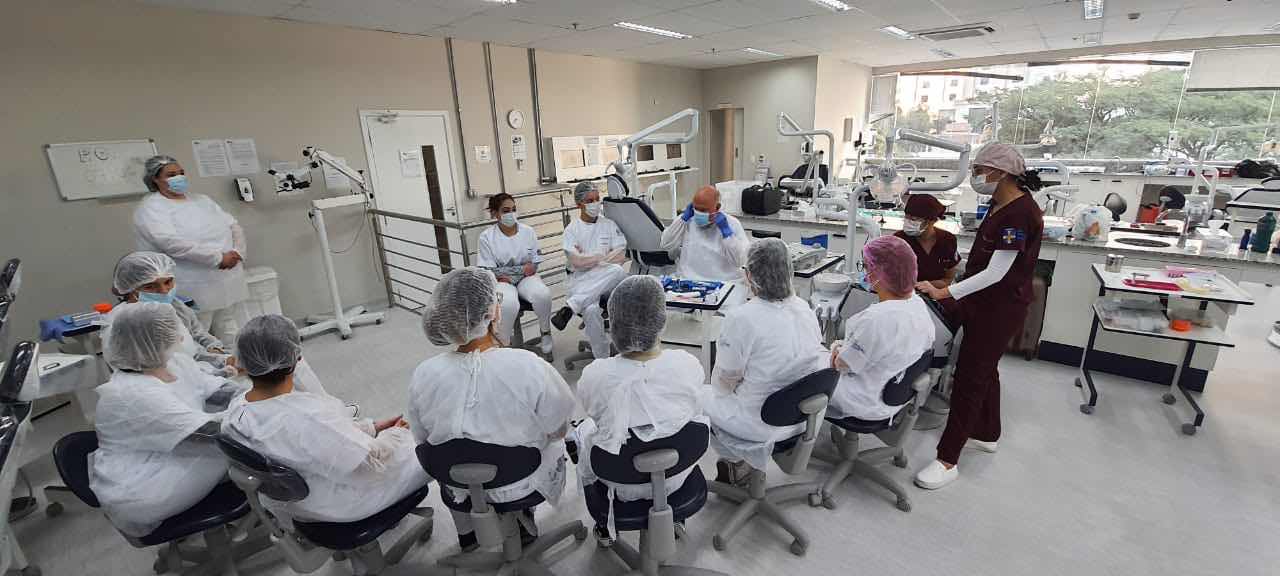
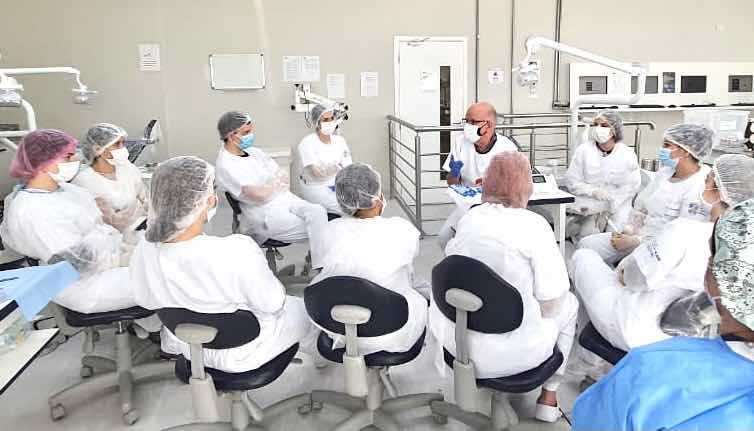
ESPECIALIZAÇÃO FFO - USP Nova Turma, Novos Desafios - 2011 2012


Sempre é dificil reunir um grupo para registrar a memória. Em um curso clínico é mais complicado. Inúmeras tentativas, semanas, meses, enfim, em dezembro conseguimos três       (duas by Alvaro Monteiro e uma Lage-Marques) a única foto "boa" foi (by Lage-Marques) resultado: obviamente eu não sai.


PESSOAL - Feliz Natal, e muita sorte, amor, saúde, sucesso em um ano de 2012 repleto de realizações pessoais profissionais e endodonticas. Rumo a excelência.

21/12/11

Microscópio na Cirurgia Endodontica - JOE 2012 - Meta Análise da Literatura

JOE 2012
Outcome of Endodontic Surgery: A Meta-analysis of the Literature—Part 2: Comparison of Endodontic Microsurgical Techniques with and without the Use of Higher Magnification

Frank C. Setzer, DMD, PhD, MS, Meetu R. Kohli, BDS, DMD, Sweta B. Shah, BDS, DMD, Bekir Karabucak, DMD, MS, and Syngcuk Kim, DDS, PhD


Introduction: The aim of this study was to investigate the outcome of root-end surgery. It identifies the effect of the surgical operating microscope or the endoscope on the prognosis of endodontic surgery. The specific outcomes of contemporary root-end surgery techniques with microinstruments but only loupes or no visualization aids (contemporary root-end surgery [CRS]) were compared with endodontic microsurgery using the same instruments and materials but with high-power magnification as provided by the surgical operating microscope or the endoscope (endodontic microsurgery [EMS]). The probabilities of success for a comparison of the 2 techniques were determined by means of a metaanalysis and systematic review of the literature. The influence of the tooth type on the outcome was investigated. Methods: A comprehensive literature search for longitudinal studies on the outcome of root-end surgery was conducted. Three electronic databases (ie, Medline, Embase, and PubMed) were searched to identify human studies from 1966 up to October 2009 in 5 different languages (ie, English, French, German, Italian, and Spanish). Review articles and relevant articles were searched for cross-references. In addition, 5 dental and medical journals (ie, Journal of Endodontics, International Endodontic Journal, Oral Surgery Oral Medicine Oral Pathology Oral Radiology and Endodontics, Journal of Oral and Maxillofacial Surgery, and International Journal of Oral and Maxillofacial Surgery) dating back to 1975 were hand searched. Following predefined inclusion and exclusion criteria, all articles were screened by 3 independent reviewers (S.B.S., M.R.K., and F.C.S.). Relevant articles were obtained in full-text form, and raw data were extracted independently by each reviewer. After agreement among the reviewers, articles that qualified were assigned to group CRS. Articles belonging to group EMS had already been obtained for part 1 of this meta-analysis. Weighted pooled success rates and a relative risk assessment between CRS and EMS overall as well as for molars, premolars, and anteriors were calculated. A random-effects model was used for a comparison between the groups. Results: One hundred one articles were identified and obtained for final analysis. In total, 14 studies qualified according to the inclusion and exclusion criteria, 2 being represented in both groups (7 for CRS [n = 610] and 9 for EMS [n = 699]). Weighted pooled success rates calculated from extracted raw data showed an 88% positive outcome for CRS (95% confidence interval, 0.8455–0.9164) and 94% for EMS (95% confidence interval, 0.8889–0.9816). This difference was statistically significant (P;.0005). Relative risk ratio analysis showed that the probability of success for EMS was 1.07 times the probability of success for CRS. Seven studies provided information on the individual tooth type (4 for CRS [n = 457] and 3 for EMS [n = 222]). The difference in probability of success between the groups was statistically significant for molars (n = 193, P = .011). No significant difference was found for the premolar or anterior group (premolar [n = 169], P = .404; anterior [n = 277], P = .715). Conclusions: The probability for success for EMS proved to be significantly greater than the probability for success for CRS, providing best available evidence on the influence of high-power magnification rendered by the dental operating microscope or the endoscope. Large-scale randomized clinical trials for statistically valid conclusions for current endodontic questions are needed to make informed decisions for clinical practice.


(J Endod 2012;38:1–10)

Key Words
Apicoectomy, dental operating microscope, endodontic microsurgery, endoscope, IRM, loupes, meta-analysis, microscope, mineral trioxide aggregate, outcome, root-end surgery, success, SuperEBA, systematic review

ISSN: 00992399
CODEN: JOEND
DOI: 10.1016/j.joen.2011.09.021
Document Type: Article
Source Type: Journa


19/12/11

Ingestão de Instrumento Endodôntico - Um relato de 2011 - 48 horas de Horror..


REVIEW ARTICLE
Accidental ingestion of foreign object: Systematic
review, recommendations and report of a case

Karthik Venkataraghavan *, A. Anantharaj, P. Praveen, S. Prathibha Rani,
B. Murali Krishnan
Department of Pediatric and Preventive Dentistry,
D.A. Pandu Memorial R.V. Dental College, Bangalore, India


Abstract

One of the serious complications during a routine endodontic procedure is accidental ingestion/aspiration of the endodontic instruments, which can happen when proper isolation is not done. There are at present no clear guidelines whether foreign body ingestion in the

 gastrointestinal tract should be managed conservatively, endoscopically or surgically. A 5 year old boy reported to the Department of Pediatric and Preventive Dentistry, D.A. Pandu Memorial R.V. Dental College, Bangalore, India, with a complaint of pain and swelling in the lower right back teeth region. Endodontic therapy was planned for the affected tooth. During the course of treatment the child accidentally swallowed a 21 mm 15 size K file. Endoscopy was performed immediately but the instrument could not be retrieved. The instrument passed out uneventfully along with the stools 48 h after ingestion.


Saudi Dental Journal
Volume 23, Issue 4, October 2011,
Pages 177-181  
ISSN: 10139052
DOI: 10.1016/j.sdentj.2010.10.007


16/12/11

Punição a quem maltrata animais - Vamos nos organizar!!!


No dia 29 de novembro p.p. o grupo foi recebido pelos deputados federais Alessandro Molon (proponente da Subcomissão Especial de Crimes e Penas), Ricardo Izar Junior (presidente da Frente Parlamentar em Defesa dos Animais) e Ricardo Tripoli, pelo senador Aloysio Nunes e por Luiz Paulo Barreto (secretário-executivo do Ministério da Justiça).
Barreto, representando o ministro José Eduardo Cardozo, também deu ideias para que o projeto de lei seja viável sem, necessariamente, exigir a detenção do agressor, como o impedimento de realizar financiamento público ou participar de concursos entre outras punições. 
Outra alternativa é identificar projetos que já estejam em andamento no Senado e tentar modificar ou incluir itens mais severos em relação à punição a esses agressores.
A comissão que foi a Brasília e que batizou a iniciativa de Lei Lobo vai definir, a partir dessas conversas, quais serão os próximos passos para tentar fortalecer os direitos dos animais.
"A impunidade está virando estimulo", afirma Miriam Miranda, presidente da ONG Vira-Lata Vira-Vida.  
Ela cuidou do rottweiler Lobo, morto último dia 15 após ser arrastado por seu dono, 
preso a um carro, por diversos quarteirões.
( by FABIANA SERAGUSA)
saiba mais 

15/12/11

Eu Doei - Um estado de amor ao próximo


Tomando como premissa que as campanhas de incentivo à doação de sangue enfatizam o ato de doar como um estado de amor ao próximo, solidariedade e consciência social. Assim sendo, percebe-se uma proximidade dos valores que são ressaltados nas religiões cristãs, como o amor ao próximo e a solidariedade, com a cidadania, que representa o conhecimento e o exercício assumidos pelo indivíduo com relação aos seus direitos e deveres enquanto ser social. Talvez essa proximidade deva ser ressaltada ainda por muito tempo, em virtude da falta de sensibilização da população brasileira para a questão da doação de sangue.

11/12/11

Equipe de Endodontia FOUSP 2011/2012


Obrigado Pessoal  - um 2012 repleto de realizações

DRAMATIZAÇÃO - Diagnóstico em Endodontia - Graduação FOUSP dez 2011


O principio da dramatização no ensino é o de causar uma impressão no estudante. Através de variadas técnicas de expressão e abordagem, torna-se possível fazer o aluno vivenciar os assuntos que estão sendo propostos. Assim, a visualização e o próprio assunto são incorporados ao mesmo tempo, e isso desencadeia, a principio, duas vantagens: a incorporação do método de reflexão, de imaginação, e a apreensão do assunto em si. Desta forma, o aluno saberá onde utilizar e de que maneira comportar-se quando, em sua vida, for  necessário esse conhecimento.


Parabéns a todos da turma 107 ENDOFOUSP.

05/12/11

Comparison of ultrasonic irrigation and RinsEndo for the removal of calcium hydroxide and Ledermix paste from root canals


Comparison of ultrasonic irrigation and RinsEndo for the removal of calcium hydroxide and Ledermix paste from root canals
Tina Rodig1, Manja Hirschleb2, Antonia Zapf3 & Michael Hu¨ lsmann1

1Department of Preventive Dentistry, Periodontology and Cariology, University of Gottingen, Go¨ttingen; 2Private Dental Practice, Luneburg; and 3Institute for Biometry, Hannover Medical School, Hannover, Germany

Abstract
Aim To compare the efficacy of ultrasonic irrigation and RinsEndo in removing calcium hydroxide and Ledermix paste from simulated root canal irregularities.
Methodology The root canals of sixty extracted single-rooted teeth were prepared using FlexMaster rotary instruments to size 60, 0.02 taper. The roots were split longitudinally, and a standardized groove was prepared in the apical part of one segment. The teeth were randomly allocated into two groups (n = 30), according to the intracanal dressing. In the first group, grooves were filled with calcium hydroxide paste (Calxyl), whereas the grooves in the second group were filled with Ledermix paste. After reassembly, the root canals were completely filled with the respective medicament using a lentulo. The removal of medicament dressing was performed after 7 days with either passive ultrasonic irrigation or RinsEndo and 1% sodium hypochlorite for 3 min. The amount of remaining medicament was evaluated under a microscope with 30 · magnification using a four-grade scoring system. A regression analysis with P £ 0.05 was performed. Ledermix paste removal was significantly more effective than the removal of calcium hydroxide (P < 0.0001), whereas irrigation technique was not a significant factor (P = 0.3712). The percentages of complete removal of calcium hydroxide and Ledermix paste were 11.7% and 51.7%, respectively. Conclusions None of the irrigation techniques was able to completely remove the intracanal medicaments from the apical part of the root canal. Irrespective of the irrigation technique, significantly less Ledermix paste was detected compared with calcium hydroxide.

Keywords: calcium hydroxide, irrigation, Ledermix paste, removal, RinsEndo, ultrasonics.
Received 6 June 2011; accepted 18 July 2011

Rodig T, Hirschleb M, Zapf A, Hu¨ lsmann M. Comparison
of ultrasonic irrigation and RinsEndo for the removal of calcium
hydroxide and Ledermix paste from root canals. International
Endodontic Journal, 44, 1155–1161, 2011.

02/12/11


Photodynamic therapy in the
control of oral biofilms
NIKOLAOS S. SOUKOS & J. MAX GOODSON

Periodontology 2000, Vol. 55, 2011, 143–166
Printed in Singapore. All rights reserved

Microbial biofilms in the oral cavity are involved in the etiology of various oral conditions, including caries, periodontal and endodontic diseases, oral malodor, denture stomatitis, candidiasis and dental implant failures. It is generally recognized that the growth of bacteria in biofilms imparts a substantial decrease in susceptibility to antimicrobial agents compared with cultures grown in suspension (39). It is therefore not surprising that bacteria growing in dental plaque, a naturally occurring biofilm (127), display increased resistance to antimicrobial agents (4, 67). Current treatment techniques involve either periodic mechanical disruption of oral microbial biofilms or maintaining therapeutic concentrations of antimicrobials in the oral cavity, both of which are fraught with limitations. The development of alternative antibacterial therapeutic strategies therefore becomes important in the evolution of methods to control microbial growth in the oral cavity. The use of photodynamic therapy for inactivating
microorganisms was first demonstrated more than 100 years ago, when Oscar Raab (164) reported the lethal effect of acridine hydrochloride and visible light on Paramecia caudatum. Photodynamic therapy  for human infections is based on the concept that an agent (a photosensitizer) which absorbs light can be
preferentially taken up by bacteria and subsequently activated by light of the appropriate wavelength (Fig. 1) in the presence of oxygen to generate singlet oxygen and free radicals that are cytotoxic to microorganisms (Fig. 2). Because of the primitive molecular nature of singlet oxygen, it is unlikely that microorganisms would develop resistance to the cytotoxic action. Photodynamic therapy has emerged as an alternative to antimicrobial regimes and mechanical means in eliminating dental plaque species as a result of the pioneering work of Professor Michael Wilson and colleagues (223) at the Eastman Dental Institute, University College London, UK. In this review, we propose to provide an overview of photodynamic therapy with emphasis on its current status as an antimicrobial therapy to control oral bacteria, and review the progress that has been made in the last 15 years concerning the applications of photodynamic therapy for targeting biofilm-associated oral infections. Problems and challenges that have arisen will be identified and discussed. Finally, new frontiers of antimicrobial photodynamic therapy research will be introduced, including targeting strategies that may open new opportunities for the maintenance of bacterial homeostasis in dental plaque, thereby providing the opportunity for more effective disease prevention and control.

23/11/11

A Minha Cozinha da Música - Contra Baixo


A minha cozinha da Música - Contra Baixo - Há diversas formas de se abordar uma nota, fazendo com que ela soe muito mais que uma simples nota, de forma que ela ganhe cor, brilho e expressão. Usando os slides, pull-of, death notes e outros artifícios contruiremos os sons.


19/11/11

Na época que escola pública era sinônimo de qualidade de ensino


GRUPO ESCOLAR PEREIRA BARRETO

O feriado paulista de 9 de julho foi instituído pela Lei Estadual nº 9.497, de 5 de março de 1997, para fixar como data magna do Estado de São Paulo o dia da deflagração da Revolução Constitucionalista de 1932.


Em 1932, a nossa escola funcionava no prédio da Rua Antonio Raposo, onde atualmente está a E. E. Anhanguera, mas o que pouca gente sabe é que o patrono da E. E. Anhanguera foi escolhido por causa do alto-relevo em gesso que se encontra na entrada do prédio atual da E. E. Pereira Barreto, na esquina das Ruas Clélia e Nossa Senhora da Lapa, que foi construído nos anos 1940.


Ocorreu que, em 1948, na cerimônia de inauguração da nova escola pública do bairro da Lapa, o então Secretário da Educação, Sr. Fernando de Azevedo, percebeu os dois painéis na entrada do edifício: o da esquerda, em homenagem à Educação e a Religião, com a figura do Padre José de Anchieta catequizando os índios, e o da direita, em homenagem ao espírito empreendedor paulista, com a figura do bandeirante Bartolomeu Bueno da Silva, mais conhecido como, Anhanguera.


GRUPO ESCOLAR PEREIRA BARRETO, EU ESTIVE LÁ.

15/11/11

Visão de preparo, odontometria e obturação do sistema endodontico.

(by Caio Souza)
Visão de preparo, odontometria e obturação do sistema endodontico. Visão de destruição. Como disse a Ana Carol Sallum "reparem na resposta do osso",  o osso deve ter dito com um enorme palavrão...

Everlasting Love - Amor eterno em várias versões

Esse é Carl Carlton, a música "EVERLASTING LOVE" muita gente gravou ...

MAGNÍFICO  Jamie Cullum

ECLÉTICO U2

PERFORMÁTICA Sandra Cretu

O MESTRE Carl Carlton

entre outros. AMOR ETERNO

30/10/11

O câncer de Lula me envergonhou segundo Giba


gilberto dimenstein


30/10/2011 - 11h09

O câncer de Lula me envergonhou

DE SÃO PAULO

Senti um misto de vergonha e enjoo ao receber centenas de comentários de leitores para a minha coluna sobre o câncer de Lula. Fossem apenas algumas dezenas, não me daria o trabalho de comentar. O fato é que foi uma enxurrada de ataques desrespeitosos, desumanos, raivosos, mostrando prazer com a tragédia de um ser humano. Pode sinalizar algo mais profundo.
Centenas de e-mails pediam que Lula não se tratasse num hospital de elite, mas no SUS para supostamente mostrar solidariedade com os mais pobres. É de uma tolice sem tamanho. O que provoca tanto ódio de uma minoria?
Lula teve muitos problemas e merece ser criticado por muitas coisas, a começar por uma conivência com a corrupção. Mas não foi um ditador, manteve as regras democráticas e a economia crescendo, investiu como nunca no social.
No caso de seu câncer, tratou a doença com extrema transparência e altivez. É um caso, portanto, em que todos deveriam se sentir incomodados com a tragédia alheia.
Minha suspeita é que a interatividade democrática da internet é, de um lado um avanço do jornalismo e, de outro, uma porta direta com o esgoto de ressentimento e da ignorância.
Isso significa quem um dos nossos papéis como jornalistas é educar os leitores a se comportar com um mínimo de decência.

NEWS in ENDODONTICS

Loading...

Aulas

Loading...